Introduction: Why Multi-Day Destination Weddings Are the New Luxury Standard
Weddings today are no longer defined by a single ceremonial moment. Modern couples are shifting away from one-day extravaganzas toward thoughtfully curated celebrations that unfold over several days. This evolution reflects a deeper desire—to create meaningful experiences, allow genuine connections to form, and transform a wedding into an unforgettable journey rather than a rushed event.
A multi-day destination wedding offers something traditional formats cannot: time. Time for families to bond, for guests to relax, for rituals to breathe, and for emotions to unfold naturally. When celebrations are spread across days, every function feels intentional rather than overwhelming. Guests aren’t just attending a wedding—they are participating in a shared story.
Destinations add another layer of magic. Whether it’s a beach, palace, vineyard, hill retreat, or heritage resort, a destination creates a cinematic backdrop that elevates every moment. The surroundings influence décor, food, music, attire, and even the pace of the celebrations. Each day becomes a new chapter, distinct yet connected.
Couples today value experience over excess. Instead of spending everything on one night, they prefer multiple thoughtfully designed events—welcome brunches that feel warm and personal, mehendi sundowners bathed in golden light, and after-parties that let everyone unwind and celebrate freely. These elements turn weddings into immersive celebrations rather than formal obligations.
The choice between a 3-day and 5-day format depends on scale, guest profile, budget, and vision. A 3-day celebration offers elegance with efficiency, while a 5-day format allows indulgence, leisure, and ultra-luxury pacing. Both, when planned correctly, deliver unforgettable memories.
This guide explores how to plan both formats seamlessly—balancing emotion, logistics, creativity, and guest comfort—while ensuring every day flows effortlessly into the next.
Understanding the Multi-Day Wedding Concept
At its core, a multi-day wedding is not about adding more events—it’s about designing a cohesive journey. Each function has a purpose, a mood, and a rhythm. The celebration unfolds gradually, allowing anticipation to build and emotions to deepen.
Unlike traditional weddings where rituals, entertainment, and social interaction are compressed into tight schedules, multi-day formats allow breathing room. Guests arrive without pressure, socialize organically, and participate without fatigue. This pacing enhances enjoyment for everyone involved—including the couple.
A well-planned multi-day celebration blends cultural traditions with contemporary experiences. Sacred rituals retain their importance, while modern events like brunches, sundowners, and after-parties add personality and fun. The balance ensures elders feel respected and younger guests feel engaged.
Luxury planners focus heavily on flow. Each day has a different energy—relaxed, celebratory, emotional, or exuberant. The success lies in managing transitions smoothly, so guests never feel confused, rushed, or overwhelmed.
Another defining feature is personalization. From curated playlists and menu stories to décor narratives and dress codes, every detail reflects the couple’s personality. The wedding becomes a shared vacation, celebration, and emotional milestone all in one.
3-Day Destination Wedding: Complete Event Breakdown
A 3-day destination wedding is ideal for couples who want a refined yet impactful celebration. It balances tradition with experience while keeping the guest journey engaging and manageable.
Day 1: Arrival, Welcome & Ice-Breaking Experiences
The first day sets the tone. Guests arrive at different times, so the focus is on comfort, warmth, and gentle socialization.
Smooth airport transfers and efficient check-ins ensure a relaxed start. Welcome hampers placed in rooms often include itinerary cards, local treats, hydration essentials, and personalized notes. These small gestures immediately make guests feel valued.
The highlight of the day is the welcome brunch. Unlike formal dinners, brunches are relaxed, sunlit, and inclusive. Poolside lawns, beachfront decks, or garden settings work beautifully. The menu is light yet indulgent—fresh fruits, live counters, regional specialties, and signature beverages.
This brunch acts as a natural ice-breaker. Families mingle casually, conversations flow without hierarchy, and relationships begin forming organically. Styling is kept soft—pastel linens, minimal florals, wicker seating, and live acoustic music that enhances the mood without overpowering it.
Day 2: Mehendi + Sangeet Evening
Day two carries vibrant energy while still feeling unhurried. The afternoon mehendi has evolved into a mehendi sundowner, one of the most loved wedding trends today.
As the sun begins to set, décor transforms into boho-inspired elegance. Low seating, macramé accents, floral installations, and warm lighting create an intimate atmosphere. Guests sip refreshing cocktails while mehendi artists work their magic. Live dhol fused with contemporary beats keeps the mood festive yet relaxed.
As evening approaches, the celebration transitions seamlessly into the sangeet. Thoughtful choreography planning ensures performances feel entertaining, not exhausting. Lighting and sound are designed to build excitement gradually—moving from ambient to energetic as the night unfolds.
Day 3: Wedding Ceremony + Reception
The final day carries emotional weight. Morning rituals are planned calmly, ensuring the couple has time to absorb the moment. Décor transitions are crucial here—daytime elegance for ceremonies and dramatic transformations for the evening reception.
Guest engagement is key. Comfortable seating, shaded areas, hydration stations, and clear movement pathways ensure everyone enjoys the ceremony without fatigue.
The reception is celebratory and immersive. Live bands, interactive entertainment, cold pyros, and fireworks elevate the evening without overshadowing intimacy. The celebration concludes with joy rather than exhaustion—leaving guests fulfilled, not overwhelmed.
5-Day Destination Wedding: Ultra-Luxury Celebration Format
A 5-day format allows indulgence, relaxation, and storytelling at its finest. It is designed for couples who want their wedding to feel like a luxury retreat.
Day 1: Guest Arrival & Welcome Night
The first evening is about easing guests into celebration mode. A themed welcome dinner sets expectations. Cultural performances, light cocktails, and elegant décor establish the tone without demanding high energy.
Day 2: Mehendi + Sundowner Experiences
This day is leisurely. Extended mehendi lounges allow guests to enjoy the process without rush. Spa sessions, pool time, and relaxation activities are woven into the schedule.
The evening sundowner features sunset cocktails, soft music, and curated décor palettes inspired by the surroundings. The focus remains on connection rather than performance.
Day 3: Sangeet & Entertainment Night
This is the most high-energy event. Professional stage design, immersive lighting, and high-quality sound systems transform the space. Performances feel polished and exciting.
Interactive elements like guest dance-offs and live DJs keep everyone involved, making the evening memorable rather than spectator-driven.
Day 4: Wedding Ceremony
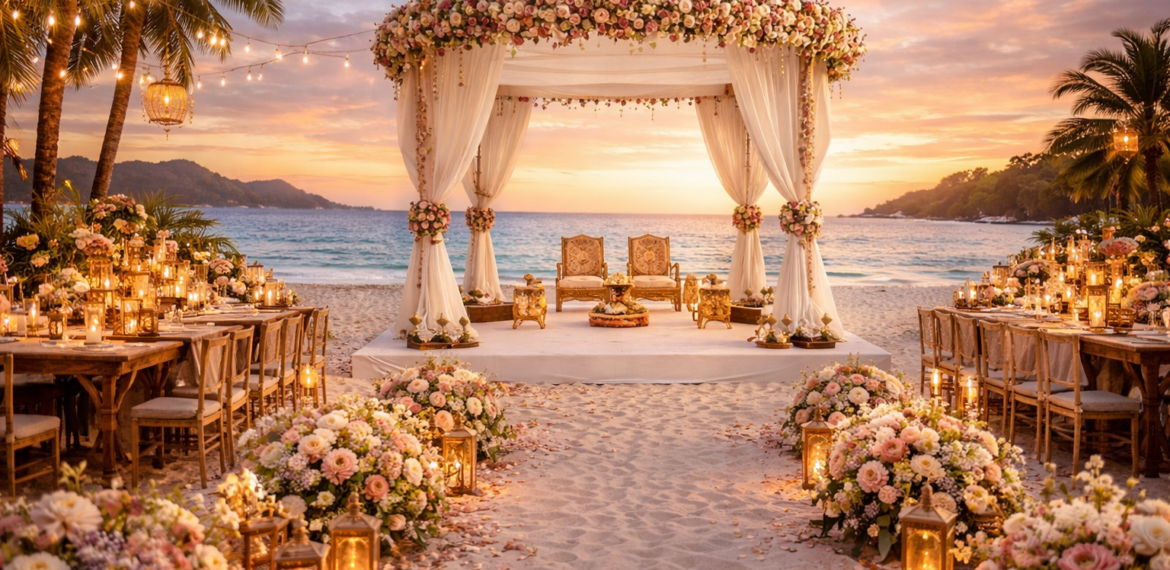
With guests fully settled, the ceremony feels deeply emotional. Grand mandap designs, thoughtful ritual management, and seamless coordination ensure nothing disrupts the moment.
Guest comfort is paramount—ushers, shaded seating, refreshments, and clear timelines keep everything flowing smoothly.
Day 5: Reception + After-Party
The final night celebrates freedom and joy. After-party planning takes center stage. Whether it’s a club-style setup, poolside bash, or yacht party, the mood is relaxed and energetic.
Late-night food stations, silent discos, and after-hours DJs ensure guests end the journey on a high—laughing, dancing, and celebrating without formality.
Designing Signature Events That Guests Remember
Welcome Brunch Concepts
Brunches encourage interaction better than dinners. Daylight settings, interactive food counters, and relaxed seating promote conversation. Menus are designed to be light yet indulgent, accommodating all dietary preferences.
Mehendi Sundowners
Sunset color palettes—terracotta, peach, gold, and sage—work beautifully. Seating layouts are informal, music is curated for mood-building, and décor feels organic rather than staged.
After-Party Planning
After-parties allow guests to let go. Lounge lighting, clear dress codes, premium beverage planning, and energetic entertainment create a celebratory close without pressure.
Guest Experience Management for Multi-Day Weddings
Guest experience defines the success of extended celebrations. Seamless airport transfers, thoughtful room allocations, hospitality desks, and clear daily itineraries eliminate confusion.
Digital invites and real-time updates keep guests informed without overwhelming them. Concierge services ensure personal needs are addressed discreetly, enhancing comfort throughout the journey.
Budget Planning for 3-Day vs 5-Day Destination Weddings
Budgeting is about smart allocation, not restriction. Costs are divided by day, allowing couples to decide where to splurge—typically on décor, entertainment, and guest comfort.
Vendor consolidation reduces costs while ensuring consistency. Hidden expenses like logistics, overtime, and contingency planning are accounted for early to avoid last-minute stress.
Décor, Themes & Styling Across Multiple Days
Each day must feel distinct yet connected. Color progression strategies help—soft tones early on, vibrant hues mid-way, and rich palettes for final celebrations.
Floral reuse, lighting transitions, and thoughtful styling ensure sustainability without compromising luxury.
Common Mistakes in Multi-Day Destination Wedding Planning
Overloading guests with too many events leads to fatigue. Poor flow between functions creates confusion. Ignoring recovery time reduces enjoyment. Lack of weather backups can disrupt everything.
Avoiding these mistakes ensures celebrations remain joyful and stress-free.
Why You Need a Professional Destination Wedding Planner
Managing timelines, vendors, guest expectations, and unforeseen challenges requires expertise. A professional planner ensures seamless orchestration, handles crises calmly, and maintains the emotional integrity of the celebration—allowing couples to truly enjoy their wedding.
V3 Events & Weddings – Trusted Destination Wedding Planners in Delhi
V3 Events & Weddings is among the most sought-after destination wedding planners in Delhi, known for crafting luxurious, well-orchestrated celebrations across India and international locations. With deep expertise in multi-day destination weddings, the team specializes in curating seamless guest experiences—from welcome brunches and mehendi sundowners to grand wedding ceremonies and high-energy after-parties. Based in Delhi, V3 Events & Weddings brings strong vendor networks, meticulous planning, and creative storytelling to every celebration. Their approach blends tradition with modern trends, ensuring each wedding reflects the couple’s personality while maintaining flawless execution. For couples seeking stress-free planning, refined aesthetics, and unforgettable destination celebrations, V3 Events & Weddings delivers excellence at every step.
Conclusion: Creating a Celebration That Feels Like a Journey
A wedding spread across days is not about length—it’s about depth. When planned with intention, every event feels purposeful, every transition seamless, and every memory lasting. From relaxed brunches to golden-hour mehendi moments and carefree after-parties, the experience becomes a shared journey rather than a schedule.
A thoughtfully designed multi-day destination wedding transforms celebration into storytelling—where love unfolds naturally, guests feel truly included, and every moment lingers long after the final dance.
FAQs
What exactly is a multi-day destination wedding?
A multi-day destination wedding is a thoughtfully curated celebration that unfolds over several days at a chosen location, allowing couples and guests to experience the wedding as a journey rather than a single event. Instead of compressing rituals, celebrations, and social interactions into one hectic day, events are spread out to create balance, comfort, and emotional depth. Each day carries a different mood—relaxed welcomes, festive pre-wedding moments, meaningful rituals, and celebratory after-parties. The destination becomes part of the narrative, influencing décor, cuisine, and experiences. This format prioritizes connection, storytelling, and guest enjoyment, making the wedding feel immersive and memorable rather than rushed.
How many days are ideal for planning a destination wedding celebration?
The ideal duration depends on the couple’s vision, guest list, and desired experience. A 3-day celebration works beautifully for couples who want elegance with structure—covering welcome events, key rituals, and a grand finale. A 5-day format offers a slower, more luxurious pace with leisure time, multiple themed events, and deeper guest engagement. The goal isn’t to add more events, but to allow moments to breathe. A well-planned multi-day destination wedding ensures guests remain excited and comfortable throughout, without feeling overwhelmed or fatigued.
Why are couples moving away from single-day wedding formats?
Modern couples value meaningful experiences over tightly packed schedules. Single-day weddings often feel rushed, leaving little time to interact with loved ones. Multi-day formats allow couples to truly enjoy their celebrations while spending quality time with family and friends. Guests traveling from afar also appreciate celebrations that justify the journey. With events spread across days, each function feels intentional and enjoyable. The emotional payoff is greater, stress levels are lower, and memories last longer—making this format increasingly preferred by couples seeking depth over display.
What events are essential in a 3-day destination wedding format?
A well-designed 3-day celebration typically includes a relaxed welcome event on day one, vibrant pre-wedding festivities on day two, and the wedding ceremony with reception on day three. Welcome brunches help guests mingle comfortably, while mehendi sundowners add color, culture, and modern flair. The final day focuses on meaningful rituals and an elegant reception. The key is pacing—keeping the first day light, the second energetic, and the third emotionally rich. This structure ensures guests remain engaged without feeling exhausted.
How does a 5-day destination wedding enhance guest experience?
A 5-day celebration allows guests to settle in, relax, and fully immerse themselves in the wedding atmosphere. Leisure activities, spa time, and informal gatherings are woven between main events, preventing fatigue. Guests feel less like attendees and more like participants in a shared journey. With themed evenings, extended mehendi lounges, entertainment nights, and curated after-parties, the experience feels indulgent yet balanced. The extended format strengthens relationships between families and creates lasting memories beyond the wedding rituals themselves.
What makes welcome brunches so popular in destination weddings?
Welcome brunches are relaxed, inclusive, and ideal for daytime socialization. Unlike formal dinners, brunches encourage easy conversations and natural bonding between families. Sunlit settings, interactive food counters, and casual seating create a warm atmosphere. Guests arriving at different times can join comfortably without pressure. As the first official gathering, a brunch sets the tone for the celebrations—friendly, joyful, and unhurried—making it a favorite element in multi-day wedding planning.
Why are mehendi sundowners considered a modern wedding trend?
Mehendi sundowners blend tradition with contemporary aesthetics. Held during sunset, they feature warm lighting, boho-inspired décor, and relaxed seating that encourages social interaction. The golden-hour setting enhances visuals while creating a calm yet festive mood. Guests enjoy live music, refreshing cocktails, and scenic backdrops while participating in rituals. This format feels more experiential than traditional daytime mehendi events, making it one of the most photographed and talked-about moments of the celebration.
How important is after-party planning in extended weddings?
After-parties allow guests to unwind after formal celebrations. These events are less structured, more energetic, and focused on fun. Thoughtful after-party planning includes lounge-style décor, clear dress codes, late-night food stations, and curated entertainment like DJs or silent discos. The goal is to let guests celebrate freely without ritual pressure. A well-executed after-party often becomes the most memorable part of the wedding journey.
How do planners maintain flow across multiple wedding days?
Flow is achieved through intentional scheduling, clear transitions, and energy management. Each day has a distinct purpose and mood, preventing repetition. Timelines are designed with buffer periods, ensuring guests aren’t rushed. Décor, music, and lighting gradually evolve rather than change abruptly. Seamless coordination between venues, vendors, and hospitality teams ensures guests move effortlessly from one experience to the next, keeping celebrations smooth and enjoyable.
What role does guest experience play in destination weddings?
Guest experience is central to multi-day celebrations. From airport transfers and room allocations to daily itineraries and hospitality desks, every touchpoint affects enjoyment. When guests feel informed, comfortable, and cared for, they engage more fully in celebrations. Digital invites, concierge services, and personalized assistance help eliminate confusion. A positive guest experience ensures celebrations feel welcoming rather than demanding.
How should couples approach budgeting for multi-day celebrations?
Budgeting requires smart allocation rather than overspending. Costs are divided across days, allowing couples to prioritize décor, entertainment, and guest comfort. Vendor consolidation helps manage expenses while maintaining quality. Hidden costs such as logistics, overtime, and contingencies should be planned early. A realistic budget ensures celebrations remain stress-free and financially balanced.
How can décor remain unique across multiple wedding days?
Maintaining uniqueness requires thoughtful styling strategies. Color progression helps—soft tones for welcomes, vibrant hues for pre-wedding events, and rich palettes for ceremonies. Floral reuse and lighting transformations ensure sustainability without repetition. Each event carries its own visual identity while maintaining overall harmony, keeping guests visually engaged throughout the celebration.
What common mistakes should couples avoid in multi-day wedding planning?
Overloading guests with too many events leads to fatigue. Poor scheduling disrupts flow, while lack of recovery time reduces enjoyment. Ignoring weather backups can cause unnecessary stress. Another mistake is underestimating logistics. Avoiding these issues ensures celebrations remain enjoyable and well-paced.
Why is professional planning crucial for destination weddings?
Multi-day celebrations involve complex coordination—timelines, vendors, guest management, and risk handling. A professional planner ensures seamless execution, manages unexpected challenges, and maintains the emotional rhythm of events. Couples can relax knowing every detail is handled with expertise, allowing them to enjoy their wedding fully.
How does a multi-day destination wedding create lasting memories?
By allowing moments to unfold naturally, this format transforms celebrations into a shared journey. Guests connect deeply, rituals feel meaningful, and celebrations feel personal rather than staged. The extended timeline creates emotional continuity, ensuring memories linger long after the wedding ends—making the experience truly unforgettable.