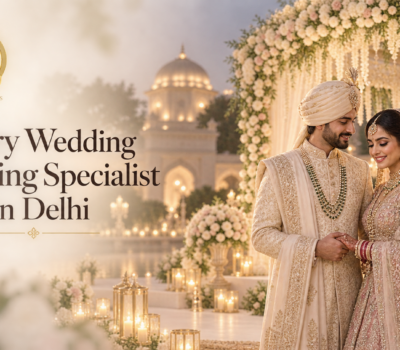

Top Destination Wedding Planners in Delhi: How to Choose the Right Team
A destination wedding gives you the chance to bring your favourite people together somewhere special. Whether you imagine a palace celebration, a beachside ceremony or an intimate wedding surrounded by mountains, the destination becomes part of your story.
However, turning that vision into a comfortable, well-organised celebration takes more than choosing a beautiful venue. Guest accommodation, airport transfers, décor, catering, ceremonies and vendor schedules all need to work together. Behind every relaxed wedding experience is a detailed plan.
If you are searching for Top Destination Wedding Planners in Delhi, the most useful question is: which team understands your wedding and can explain how it will deliver it?
This guide helps you assess planning teams, compare proposals and ask the right questions before making a commitment. It also introduces the planning services offered by V3 Events & Weddings.
What Does a Destination Wedding Planner Do?
A destination wedding planner connects your ideas with the practical arrangements required to bring them to life. Depending on the agreed scope, the planner may help with destination research, venue selection, budgeting, design, vendors, hospitality and coordination during the celebrations.
The role involves many connected decisions. A venue may look perfect but have insufficient rooms. An outdoor ceremony may need an indoor alternative. Guests arriving on different flights may require several transfer schedules.
A capable planner identifies these issues early and helps you understand your options.
Before hiring a team, establish whether its proposal covers full wedding planning, selected services or coordination during the events. These arrangements involve different responsibilities, so the scope should be clearly documented.
1. Define Your Wedding Priorities Before Comparing Planners
Your search becomes easier when you know what matters most to you and your family. You do not need a complete wedding plan before the first consultation, but a basic brief gives the discussion direction.
Prepare an outline covering:
- Your preferred wedding dates or date range.
- An estimated guest count.
- The number of functions.
- Your overall spending limit.
- Destinations you are considering.
- Accommodation and hospitality expectations.
- Important cultural or religious requirements.
Also identify your top three priorities. These might be exceptional food, comfortable accommodation and meaningful décor. Another couple may prioritise an intimate atmosphere, photography and a scenic ceremony.
When evaluating Top Destination Wedding Planners in Delhi, look for a team that responds to your priorities with relevant questions. Its initial recommendations should reflect your brief rather than a standard package.
2. Look for Experience Relevant to Your Celebration
A planner’s portfolio can help you understand its design style, but attractive photographs reveal only part of the work. Ask about weddings that resemble yours in guest count, destination setting and number of events.
Experience with a large celebration does not automatically show how a team handles an intimate wedding. Similarly, coordinating a city venue involves different arrangements from managing a property with limited transport access.
Ask the planner to explain a previous project from planning through execution. What needed careful coordination? How were arrivals managed? What happened when the schedule changed?
Specific answers offer stronger evidence than broad claims about creating perfect weddings. Where possible, request recent client references and ask whether the planner delivered the agreed scope, communicated clearly and handled changes responsibly.
3. Assess Destination Knowledge Beyond Venue Names
A destination recommendation should explain how the location fits your celebration.
Ask about the journey from the nearest airport or railway station, accommodation capacity, local transport, event spaces and access for vendors. Consider how these details will affect elderly relatives, children and guests arriving after a long journey.
For example, a scenic hillside venue may involve additional travel time. A beach setting may require careful consideration of wind, outdoor comfort and backup arrangements. A heritage property may have restrictions affecting installations or event timings.
These details vary by property and should be verified before booking.
The right planner should help you compare destinations using both atmosphere and practicality. A place that photographs beautifully must also support your ceremonies, hospitality expectations and budget.
4. Ask for a Budget You Can Understand
Budget clarity is essential when choosing a wedding planning team. A proposal should make it possible to understand what you are paying for, which figures are estimates and what remains undecided.
Discuss the major cost categories, including accommodation, venue hire, food and beverages, décor, production, entertainment, transport and planning fees.
Also ask about expenses that may sit outside the initial quotation, such as additional meals, extended event hours, vendor accommodation, freight or extra transfers.
Useful questions include:
- Which services are included in the planning fee?
- Which payments will be made directly to vendors?
- Are taxes included in the quoted figures?
- How will additional spending be approved?
- What assumptions does the estimate use?
- How will budget updates be shared?
Compare proposals using the same guest count, event schedule and service expectations. A lower total may cover fewer responsibilities.
5. Evaluate Guest Hospitality Carefully
Guests often remember how they felt throughout the wedding as clearly as they remember the décor. Comfortable arrivals, organised check-ins, timely meals and clear information make the experience easier for everyone.
Ask how the planner will collect arrival details, assign rooms, coordinate transfers and communicate the event schedule. Confirm whether a hospitality desk or designated contact will be available during the celebration.
Share relevant needs early, including dietary requirements, mobility concerns and arrangements for children. These details should inform venue selection and room allocation.
Practical situations deserve attention too. If guests arrive before check-in time, where can they rest? If a ceremony finishes late, how will they return to their accommodation?
A thoughtful hospitality plan addresses these questions before guests begin travelling.
6. Choose a Team That Understands Your Design Preferences
Your wedding design should reflect your personalities, traditions and setting. Begin with the feeling you want to create: intimate, festive, elegant, colourful or understated.
Share references, but explain what you like about them. It may be the lighting, colour palette, flowers or seating arrangement rather than the entire design.
Ask the planner to show how the concept will work in your actual venue and budget. Discuss guest movement, ceremony visibility, photography, dining layouts and comfort alongside the visual details.
A practical design conversation should also address installation time and venue permissions.
The Top Destination Wedding Planners in Delhi you shortlist should be able to translate your preferences into a coherent proposal, with clear explanations of materials, inclusions and costs.
7. Understand How Vendors Are Selected and Managed
A destination wedding brings together several specialist teams. Their work needs to follow one coordinated schedule.
Ask how the planner selects vendors and whether you can review their relevant work before approval. Understand who negotiates the scope, confirms requirements and follows up on delivery.
Vendor coordination should cover arrival times, setup access, equipment needs, rehearsals and responsibilities during each event.
Confirm whether you can appoint vendors independently and how they will be integrated into the plan. If you already have a photographer, makeup artist or family caterer in mind, disclose this early.
The proposal should explain which vendor services are included and which require separate agreements. Clear boundaries help avoid duplicated work, missing tasks and unexpected expenses.
8. Meet the People Who Will Manage Your Wedding
The person presenting the proposal may not be the person coordinating your celebration on-site. Before booking, ask who will lead the project and who will attend the wedding.
Discuss the proposed team structure for your guest count and event schedule. Understand who will manage hospitality, vendors, production and communication with the family.
You should know your main contact and the process for resolving urgent decisions. A planner should also explain how updates will be shared during the months before the wedding.
Regular communication can be simple: an updated budget, a task tracker and scheduled discussions may be sufficient. What matters is that decisions are recorded and everyone knows what happens next.
Clear ownership helps prevent small issues from becoming last-minute confusion.
9. Ask About Backup Arrangements
A well-prepared wedding plan allows room for change. Weather, travel delays and scheduling adjustments can affect a destination celebration.
Discuss the situations most relevant to your venue. For an outdoor function, ask about the alternative space, its capacity and the time needed to change the setup. Confirm any additional costs associated with that option.
Ask how delayed guest arrivals, equipment issues or vendor substitutions would be handled. These conversations should lead to practical arrangements rather than general reassurance.
Also discuss how a change will be approved. Some decisions may need immediate action, while others should require your consent before additional spending.
Backup planning gives the team a clear response when circumstances change and helps families make decisions with less pressure.
10. Review the Written Scope Before Booking
A detailed proposal is a useful starting point, but the final agreement should accurately describe the services you are hiring.
Review the planning responsibilities, event dates, payment schedule, deliverables and exclusions. Check how changes, postponements, cancellations and additional requirements will be handled.
For design work, ask what the quoted scope includes and how revisions are managed. For hospitality, confirm the agreed responsibilities and operating hours.
For an international destination, clarify who will verify travel requirements, venue permissions and any documentation relevant to the ceremonies. Obtain current information from the appropriate official authorities.
If a clause is unclear, request an explanation before signing. The purpose is to establish shared expectations while there is still time to resolve questions calmly.
A Simple Framework for Comparing Wedding Planners
When you have several proposals, use consistent criteria to assess them. This keeps an impressive presentation from overshadowing the practical details.
| What to compare | Evidence to request |
|---|---|
| Relevant experience | Comparable wedding examples and references |
| Destination suitability | Venue options with travel and accommodation details |
| Budget transparency | Itemised estimates, inclusions and exclusions |
| Guest hospitality | Arrival, rooming and communication plan |
| Design approach | Concepts suited to your brief and venue |
| Execution team | Named project lead and on-site responsibilities |
| Change management | Approval process and backup arrangements |
After each consultation, note how clearly the team answered your questions. A strong proposal should make the wedding easier to understand, including the decisions that remain open.
Common Mistakes to Avoid During Your Search
One common mistake is choosing a planner solely because of striking social media photographs. Visual work matters, but you also need evidence of organisation, communication and delivery.
Another is finalising the destination before estimating guest numbers and accommodation needs. A property may suit the ceremony while creating difficulties for guest stays.
Avoid assuming that an “all-inclusive” proposal covers every requirement. Ask for written inclusions and identify services that are charged separately.
It is also helpful to appoint one family contact for consolidated feedback. Conflicting instructions from several people can slow decisions and affect costs.
Finally, allow enough time to compare proposals thoughtfully. Booking under pressure can leave important questions unanswered.
Considering V3 Events & Weddings for Your Destination Wedding
For couples exploring Top Destination Wedding Planners in Delhi, V3 Events & Weddings is a team to consider based on its stated service offering. Its official website describes destination wedding planning support covering venue selection, décor, entertainment and hospitality. V3 Event
Use your initial consultation to discuss how those services would apply to your celebration. Share your guest count, preferred destinations, ceremonies, budget and priorities, then request a proposal tailored to that brief.
Ask V3 Events & Weddings about relevant wedding examples, the proposed planning team and the responsibilities included in your package. Discuss the arrangements for guests as carefully as the design concept.
This approach helps you assess the fit between your expectations and the proposed services before moving ahead.
Choose a Team You Can Trust With the Details
Finding the right wedding planner is about selecting people who understand your celebration and can turn your ideas into an organised, realistic plan.
Relevant experience, transparent costs, thoughtful hospitality and clear responsibilities are useful signs of a strong working relationship. Pay attention to how the team listens, explains options and follows through during the selection process.
As you research Top Destination Wedding Planners in Delhi, focus on the evidence behind each proposal and the support your family will need.
Connect with V3 Events & Weddings to discuss your destination wedding vision and request a clear planning proposal. With the right team and well-defined expectations, you can spend more of your celebration enjoying the people and moments that matter most.
FAQ
1. How do I choose among the top destination wedding planners in Delhi?
Compare relevant wedding experience, client feedback, budget transparency and planning services. Ask for examples of similar celebrations and a written proposal covering venue selection, décor, vendor coordination and guest hospitality. Choose a team that understands your priorities and communicates clearly.
2. What services does a destination wedding planner provide?
Depending on the package, services may include destination research, venue selection, budget planning, décor design, vendor coordination, entertainment, guest accommodation and transport arrangements. Always confirm the inclusions and responsibilities before booking.
3. How much does hiring a destination wedding planner in Delhi cost?
The fee depends on the destination, guest count, number of functions, planning scope and team requirements. Request an itemised proposal that separates planning fees from venue, accommodation, catering, décor and other expenses.
4. When should we book a destination wedding planner?
Start contacting planners once you have an approximate date, guest count and budget. Allow more planning time if you want a popular venue, several wedding functions or an international celebration. Confirm planner and venue availability before making commitments.
5. Can a wedding planner help us choose the right destination?
Yes. A planner can help compare destinations based on your budget, preferred setting, travel convenience, accommodation needs and ceremony requirements. Ask for recommendations that explain practical advantages as well as visual appeal.
6. How can we keep a destination wedding within our budget?
Set a clear spending limit and identify your main priorities. Ask your planner to track costs, explain exclusions and obtain approval before additional spending. Finalising the guest count and number of functions early also helps control expenses.
7. Can destination wedding planners coordinate accommodation and guest transfers?
Many planners offer these services within their hospitality scope. Confirm who will manage room allocation, arrival information, airport transfers, check-ins and guest communication. Share dietary requirements and accessibility needs early.
8. What should we check before signing a wedding planning agreement?
Review the services, deliverables, payment schedule, exclusions and cancellation or postponement terms. Confirm the project lead, on-site team responsibilities and process for approving changes. Request written clarification for anything that is unclear.
9. What happens if bad weather affects an outdoor wedding function?
Ask your planner and venue about an alternative indoor or covered space before booking. Confirm its capacity, setup requirements, availability and additional costs. The plan should also identify when and who will decide to move the event.
10. How can we begin planning with V3 Events & Weddings?
Prepare a brief with your preferred dates, estimated guest count, budget, destination ideas and planned functions. Discuss these details with V3 Events & Weddings and request a tailored proposal outlining services, costs and planning responsibilities.